---
Hypertension & LVH
Hypertension and Left Ventricular Geometry
One can identify four groups of patients:
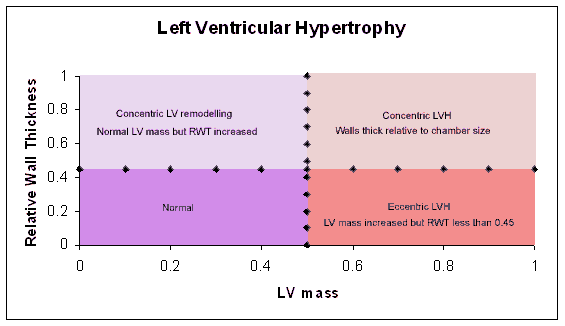
This graphic illustrates the various geometric patterns of left ventricular hypertrophy. LV mass is expressed in non-specific units- with a mass greater than 0.5 signifying hypertrophy. Relative wall thickness (RWT) is calculated in the standard manner with a value greater than 0.45 indicating the walls to be relatively thick compared to the size of the left ventricular chamber.
For each individual patient, in addition to hypertension there will be other factors that impact on the left ventricle. Investigations into various factors that might influence the final geometric pattern of the left ventricle have been reported. Presumably, it is the net effect of these factors that results in the final geometric pattern of the left ventricle in a particular patient.
I suspect a single assessment for LVH with echocardiography may be valuable in some patients.
- Echo may help in confirming the need to initiate treatment for hypertension or emphasising the need to ensure good control of hypertension. This might particularly apply to patients that do not exceed the "treatment threshold" recommended by the NZ guidelines on prevention of cardiovascular disease. In other words, even though a particular patient may have a risk below the treatment threshold, we might decide that echo evidence of LVH should not be ignored and anti-hypertensive treatment started.
- There will be other patients in whom we may decide to try to ensure "optimal control of hypertension" rather than just try to reduce the calculated risk below 15% as recommended by the NZ guidelines.
Hitesh Patel, Cardiologist
5th August, 2004